
Search News
Industry Portal
Popular Tags
How to tell if an automation engineering supplier can deliver
Author
Dr. Victor Gear
Time
May 05, 2026
Pageviews
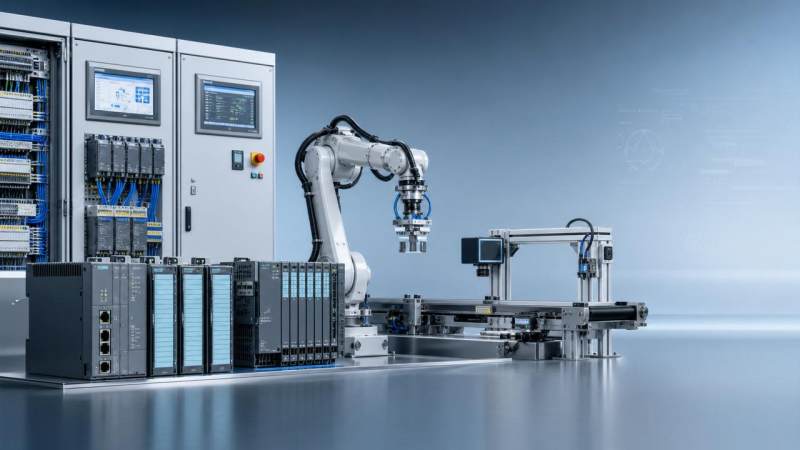
Choosing the right automation engineering supplier can determine whether your project stays on schedule, meets performance targets, and avoids costly integration risks. For project managers and engineering leads, the real challenge is not finding suppliers, but identifying those with proven technical depth, standards compliance, and delivery reliability. This guide outlines the key signs that an automation engineering supplier can truly deliver in complex industrial environments.
When buyers search for ways to evaluate an automation engineering supplier, they are usually not looking for generic vendor lists or broad definitions of automation. They want a practical way to reduce project risk before purchase orders are signed. In most cases, the core question is simple: can this supplier turn promises into a working, supportable, standards-compliant system in the real world?
For project managers and engineering leaders, that judgment depends on more than sales presentations. The strongest suppliers show clear evidence across engineering capability, delivery process, integration experience, documentation quality, compliance discipline, and post-installation support. If these areas are weak, delays, rework, and hidden lifecycle costs often follow.
Start with the signs that matter most to project delivery

The fastest way to assess whether an automation engineering supplier can deliver is to focus on the indicators that directly affect execution. These are not abstract qualities. They are visible, testable signals that show whether a supplier can handle scope complexity, manage interfaces, and keep technical decisions aligned with schedule and performance requirements.
At a high level, reliable suppliers usually demonstrate five things early: a structured engineering process, proven experience in comparable applications, realistic timelines, traceable compliance with relevant standards, and strong communication between commercial and technical teams. If any one of these is missing, the risk profile changes immediately.
This matters because industrial automation projects rarely fail for a single dramatic reason. More often, they slip because of small weaknesses that compound over time: unclear specifications, poor controls integration, under-scoped software work, inadequate FAT planning, or delayed issue escalation. A capable supplier reduces these risks before they become expensive.
Can they show relevant project experience, not just general capability?
One of the clearest indicators of delivery reliability is relevant experience. Not all automation experience is equal. A supplier may be strong in standalone machinery but weak in line integration. They may be excellent in robotics but less capable in PLC architecture, MES connectivity, or motion synchronization. Your evaluation should therefore focus on project similarity, not just project volume.
Ask for examples that match your environment in practical terms: production speed, product variability, safety requirements, control complexity, required uptime, data integration, and regulatory expectations. A supplier that has successfully delivered high-speed packaging lines may not automatically be the right choice for a batch process system, a cleanroom application, or a brownfield retrofit with legacy controls.
Good suppliers can explain exactly what part of a previous project is relevant to yours. They should be able to discuss the control strategy, risk points, commissioning challenges, and lessons learned. Vague case studies without technical detail are far less useful than a focused walkthrough of one comparable implementation.
Look for evidence that they understand the operational consequences of engineering choices. For project leaders, this is critical. You are not only buying hardware or code. You are buying system performance, maintainability, and a lower chance of disruption during startup.
Do they have the engineering depth to manage system complexity?
A dependable automation engineering supplier needs more than product knowledge. They need multidisciplinary engineering depth. In modern industrial environments, successful delivery often depends on how well mechanical, electrical, controls, motion, robotics, safety, networking, and software layers are integrated.
This is especially important when projects involve multiple vendors, third-party equipment, or plant-level software connections. Weak suppliers often look capable during early conversations because they understand individual components. Problems appear later when interfaces between systems become difficult to manage. That is where real engineering maturity shows.
Ask how the supplier structures its engineering team. Do they have in-house PLC programmers, electrical designers, safety specialists, robotics engineers, and commissioning personnel? Or do they rely heavily on outsourced resources that may not be fully aligned on standards, timing, or design intent? A fragmented delivery model can work, but it needs strong governance to avoid handoff issues.
Also examine how they manage functional specifications, IO lists, sequence definitions, alarm philosophy, network architecture, and version control. Suppliers that can deliver consistently tend to have disciplined design methods. They do not improvise core engineering documents late in the project.
How realistic is their delivery plan?
Many project failures begin with an unrealistic promise. A supplier eager to win the order may commit to lead times or milestones that do not reflect engineering hours, procurement constraints, panel build schedules, software development effort, or site commissioning conditions. Project managers should treat aggressive schedules with caution unless the supplier can show the logic behind them.
A credible delivery plan should break the project into clear phases such as requirement definition, design approval, procurement, build, software development, factory acceptance testing, shipment, installation, site acceptance testing, and ramp-up support. Each phase should have dependencies, review points, and decision gates.
It is also useful to ask where schedule risk is most likely to emerge. Strong suppliers can answer this directly. They may identify long-lead components, customer-side data gaps, third-party machine interface uncertainty, or change-control risks. That kind of transparency is usually a positive sign, not a weakness. It shows the supplier understands the project in practical terms.
Be wary of timelines that ignore validation, debugging, or site conditions. In industrial automation, the last 10 percent of work often consumes disproportionate effort. Reliable suppliers account for that reality instead of assuming ideal conditions from design through commissioning.
Can they translate standards compliance into execution quality?
Standards compliance is one of the most misunderstood aspects of supplier evaluation. Many vendors claim alignment with ISO, IEC, CE, or other requirements, but the real question is whether compliance is built into their engineering and documentation process. Project leaders should look for evidence that standards are operational, not merely mentioned in sales material.
For example, can the supplier explain how they approach machine safety, control panel design, electrical documentation, software validation, and risk assessment? Can they show templates or past deliverables that reflect recognized industrial practices? A supplier that takes compliance seriously will have repeatable methods for integrating these requirements into project execution.
This is especially important in multinational or multi-site manufacturing programs, where documentation quality and standard conformity affect not only startup, but also internal approvals, maintenance training, insurance exposure, and future replication. A technically sound system that lacks proper documentation can still become a major business problem.
In many cases, the strongest automation engineering supplier is not the one making the broadest claims, but the one providing the clearest traceability between design decisions, testing procedures, and compliance obligations.
How strong are their testing, validation, and acceptance processes?
Testing discipline is one of the most reliable indicators of whether a supplier can truly deliver. Good suppliers do not treat factory acceptance testing as a last-minute event. They design the project with verification in mind from the beginning. That means defining performance criteria early, building test cases around the functional specification, and documenting results in a way that supports issue resolution.
Ask how they conduct FAT and SAT. Do they use structured checklists? Do they simulate inputs and edge cases? Do they verify alarms, interlocks, safety logic, communication handshakes, and recovery behavior after faults? A supplier that only demonstrates normal operation may leave critical startup risks undiscovered until equipment reaches site.
For project managers, test readiness matters because every unresolved issue moved downstream becomes more expensive. A defect found during internal validation is usually manageable. The same defect found during site commissioning can delay production, trigger travel costs, increase contractor hours, and strain stakeholder confidence.
It is also worth asking whether the supplier supports digital testing methods such as offline simulation, virtual commissioning, or emulation where appropriate. These approaches are not mandatory for every project, but in complex systems they can significantly reduce integration risk.
What does their communication style reveal about future project performance?
Delivery reliability is strongly linked to communication quality. This does not mean polished presentations. It means whether the supplier communicates clearly about scope, assumptions, risks, changes, and responsibilities. In automation projects, many serious problems start as communication gaps rather than engineering failures.
During evaluation, pay attention to how the supplier answers technical and commercial questions. Are responses consistent across sales, engineering, and project management contacts? Do they clarify ambiguous requirements instead of making favorable assumptions? Do they document action items and follow through? These are early signals of how the project will be managed after contract award.
Strong suppliers are usually disciplined in change control. They distinguish between base scope and optional additions. They explain the impact of requested changes on cost, schedule, testing, and performance. This is extremely valuable for engineering leaders, because uncontrolled scope drift is one of the fastest ways to lose budget and timeline control.
Another practical indicator is escalation behavior. When a risk or issue appears, does the supplier surface it quickly with proposed options, or do they delay until the problem becomes harder to solve? Reliable suppliers understand that transparency protects the project even when the message is inconvenient.
Will they still be useful after installation and startup?
A supplier’s value does not end at shipment. In industrial automation, long-term support can determine the actual return on investment. Even well-executed systems require tuning, troubleshooting, spare parts planning, software backups, operator training, and periodic upgrades. A supplier that disappears after commissioning creates hidden lifecycle risk.
Ask what post-startup support looks like. Is remote support available? What are the response times? How are software revisions controlled? Do they provide as-built documentation, training materials, and maintenance guidance? Can they support future expansions or line modifications without rebuilding system knowledge from scratch?
This is particularly important for sites with limited internal automation resources. A supplier that delivers a functioning system but leaves weak documentation or poor handover may increase dependency while reducing operational confidence. By contrast, a supplier that enables maintainability adds strategic value beyond the initial project.
For project owners managing multiple facilities or long-term modernization programs, support scalability also matters. The best partners can support standardization across sites, reducing engineering variation and improving repeatability for future deployments.
Questions project managers should ask before selecting an automation engineering supplier
To move from impressions to evidence, decision-makers should use a structured supplier review. The most useful questions are direct and practical. Ask which parts of the proposed solution are standard, which are custom, and which create the highest execution risk. Request sample deliverables such as functional specifications, test protocols, and documentation packages.
Ask who will actually execute the work, not only who will present the proposal. Confirm whether critical engineering roles are internal. Review how issues are tracked, how milestones are approved, and how changes are priced and governed. If the supplier cannot explain these basics clearly, project execution may become reactive.
It is also wise to ask for references from customers with similar project conditions. A strong reference conversation should reveal whether the supplier was responsive during integration challenges, accurate in scheduling, disciplined in commissioning, and effective in post-launch support. These details often matter more than initial purchase price.
Finally, assess whether the supplier challenges unrealistic assumptions in your own scope. Counterintuitive as it may seem, a supplier that asks difficult questions early may be more dependable than one that agrees with everything. Real delivery confidence is built on technical honesty.
Final assessment: what a deliverable supplier looks like
A capable automation engineering supplier is not defined by branding, catalog size, or the lowest quoted cost. They are defined by their ability to turn requirements into a working system with predictable performance, documented compliance, controlled risk, and long-term supportability.
For project managers and engineering leads, the most reliable signs are consistent: relevant project experience, multidisciplinary engineering depth, realistic scheduling, strong standards discipline, rigorous testing, transparent communication, and post-startup commitment. These factors are what separate suppliers that sell automation from suppliers that actually deliver it.
If you evaluate suppliers through that lens, you will make better decisions before contracts are signed and reduce the chance of late surprises during execution. In complex industrial environments, that is often the difference between a project that merely launches and one that performs as intended over its full lifecycle.
Recommended News
- 2026/10/24Car Spare Parts: How to Check Fitment and Avoid Ordering the Wrong PartOrder car spare parts with confidence. Learn how to verify VINs, OEM numbers, and fitment details to avoid costly mistakes and choose the right replacement first time.
- 2026/10/23How Do You Select a Motion Control System for Synchronized Axes?How do I select a motion control system for synchronized axes? Discover key timing, feedback, and performance checks to choose confidently and reduce costly integration risks.
- 2026/10/23Integrating End-of-Line Sortation with Packing Stations and Conveyor ControlsOptimize end of line sortation with coordinated packing stations and conveyor controls. Learn how to prevent bottlenecks, improve routing accuracy, and handle exceptions reliably.