Search News
Industry Portal
Popular Tags
Where industrial robotics custom delivers more than standard cells
Author
Dr. Victor Gear
Time
May 06, 2026
Pageviews
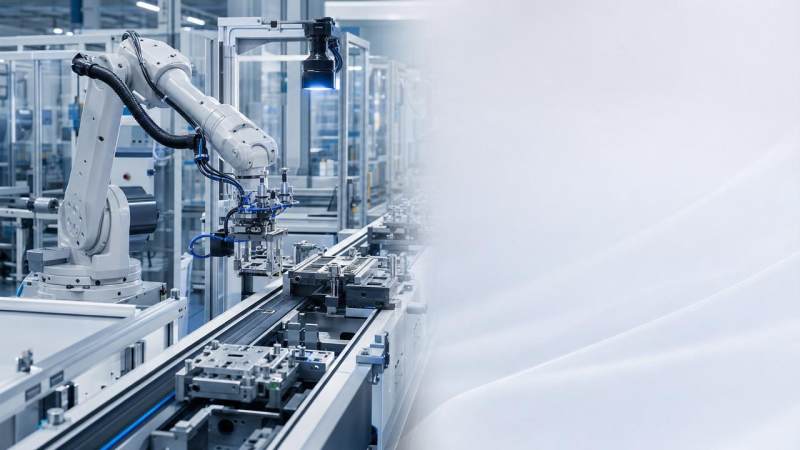
For enterprise decision-makers under pressure to improve throughput, flexibility, and ROI, industrial robotics custom solutions often deliver far more than standard cells. By aligning robot architecture, control logic, and software integration with real production demands, manufacturers can reduce bottlenecks, de-risk automation investments, and build smarter, more scalable operations.
Why scenario differences matter before choosing industrial robotics custom
The biggest mistake in factory automation is assuming that one robot cell design fits every production context. A standard cell can be effective when cycle times are predictable, part variation is low, and upstream or downstream systems are stable. But many real-world factories do not operate under those conditions. They run mixed-product schedules, deal with labor shortages, face frequent engineering changes, and need equipment that can connect with PLC, MES, vision, traceability, and quality systems.
That is where industrial robotics custom becomes a strategic decision rather than a technical preference. For decision-makers, the issue is not simply whether a robot can perform a task. The question is whether the automation solution fits the business scenario: product mix, takt time, footprint, compliance needs, integration complexity, maintenance capability, and expansion plans. A custom robotic architecture may cost more upfront, yet often lowers total risk by reducing rework, downtime, changeover friction, and future retrofit expense.
For organizations using engineering benchmark platforms such as G-IFA, the practical advantage is the ability to compare robotic performance, control compatibility, software integration depth, and standards alignment across vendors. That matters because scenario fit depends on both hardware precision and software intelligence. A robot arm with excellent payload accuracy may still underperform if the control layer, motion planning, or industrial IoT connectivity do not match plant reality.
Typical business scenarios where industrial robotics custom outperforms standard cells
Industrial robotics custom is especially valuable in applications where production conditions vary faster than generic automation templates can absorb. Below are the most common scenarios in which custom engineering typically creates measurable operational value.
High-mix, low-to-medium volume production
Electronics assembly, specialty packaging, medical device manufacturing, and contract manufacturing often process many SKUs in short runs. In these environments, standard cells may become inefficient because tooling, grippers, recipes, and vision programs need frequent adjustments. Industrial robotics custom helps by combining flexible end-of-arm tooling, recipe-driven changeover logic, adaptive vision, and smarter HMI design. The benefit is not just automation; it is preserved agility.
Heavy-duty or irregular material handling
In metal processing, building materials, logistics, and industrial component handling, products may vary in size, center of gravity, surface condition, or placement consistency. A standard palletizing or pick-and-place cell may struggle if material flow is not tightly controlled. Industrial robotics custom allows integrators to design specialized gripping systems, force sensing, safety zoning, conveyor synchronization, and robust recovery logic for unstable loads and variable layouts.
Precision processes with quality traceability requirements
Automated dispensing, welding, inspection, screwdriving, and laser processing often require more than repeatability. They demand process verification, data logging, pass/fail logic, and integration with MES or ERP. Here, industrial robotics custom supports closed-loop quality control by connecting robot execution data with barcode systems, torque feedback, vision inspection, and production records. This is often essential in regulated or quality-sensitive operations.
Brownfield factories with legacy equipment
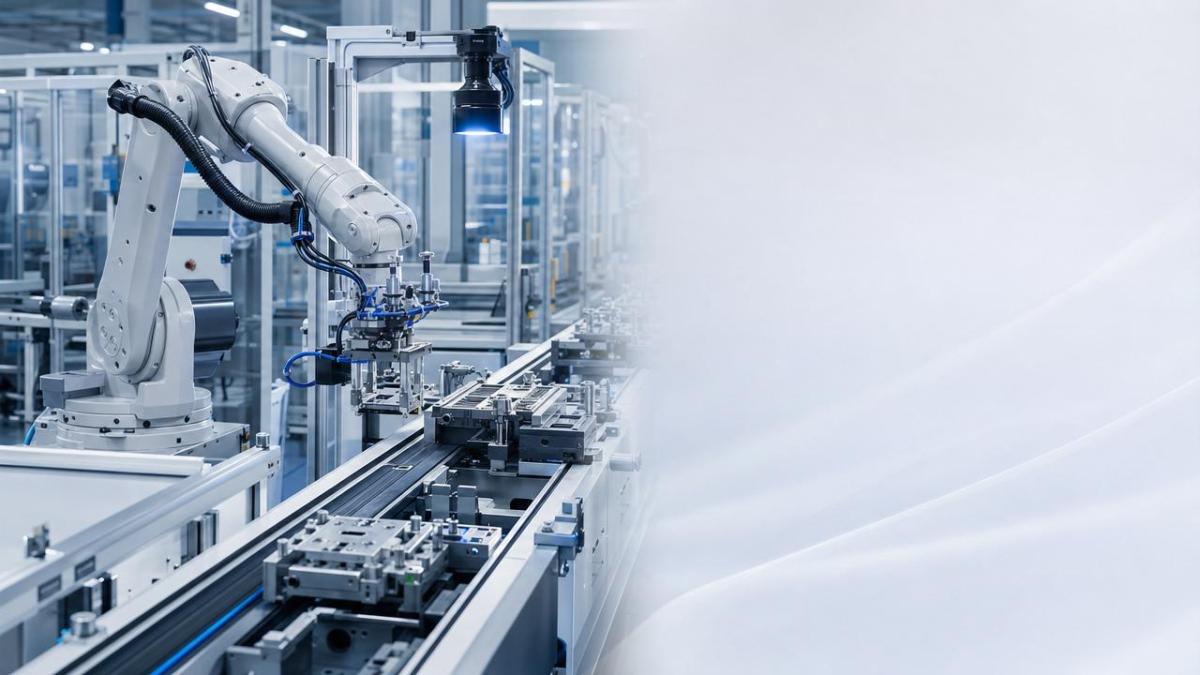
Many investment decisions are made in plants that cannot afford full greenfield redesign. Existing conveyors, presses, CNC machines, fixtures, and control systems must stay in service. In these cases, standard cells often create integration bottlenecks because they assume ideal interfaces. Industrial robotics custom is more suitable because it can be designed around existing PLC standards, communication protocols, line constraints, and maintenance practices. The result is a smoother adoption path and lower operational disruption.
Scenario comparison: what decision-makers should prioritize
The right automation decision depends on matching technical design with production reality. The table below shows how major scenarios differ in what matters most.
How needs change by enterprise type and operating model
Not every company should approach industrial robotics custom in the same way. The right decision criteria vary based on business model, internal engineering strength, and growth expectations.
Large multi-site manufacturers
For large enterprises, the core question is standardization versus site-specific optimization. A fully custom solution at every plant may create governance complexity. However, a modular industrial robotics custom strategy can solve this by standardizing controls philosophy, data structures, safety architecture, and service procedures while customizing tooling, fixtures, and software layers for local process variation. This balance supports scale without ignoring operational differences.
Mid-sized manufacturers scaling output
These firms often feel the strongest pressure: labor instability, tighter lead times, and capital discipline. In this segment, industrial robotics custom is most attractive when it solves a high-cost constraint such as manual bottlenecks, scrap reduction, or inconsistent throughput. The decision should focus on payback visibility, service support, and whether the automation can scale to adjacent lines without major redesign.
System integrators and OEM-linked projects
When a company delivers equipment to end users, the value of industrial robotics custom often lies in differentiation. Integrators can create stronger offerings by tailoring robotic motion, digital diagnostics, and interoperability across PLC, servo, and MES layers. In competitive bids, this can be more persuasive than quoting a generic cell, especially when clients need long-term adaptability rather than lowest initial price.
What to validate before approving a custom robotics investment
A custom solution should not mean uncontrolled scope. It should mean precise alignment. Before approving industrial robotics custom, enterprise leaders should require validation in five areas.
1. Process variability
Measure actual part variation, cycle fluctuation, rework triggers, and operator interventions. If variability is high, a standard cell may look cheaper but generate hidden losses after launch.
2. Control and software architecture
Confirm compatibility with existing PLC platforms, motion systems, SCADA layers, and MES/ERP data requirements. This is where benchmark-driven review is critical. Hardware performance without software fit rarely delivers expected ROI.
3. Safety and compliance pathway
A custom cell should still align with relevant ISO, IEC, and CE expectations where applicable. Decision-makers should ask how safety logic, risk assessment, access control, and validation will be documented and maintained.
4. Lifecycle support
Custom does not help if only one engineer can maintain it. Review spare parts strategy, remote diagnostics, training depth, documentation quality, and version control for software changes.
5. Expansion logic
The best industrial robotics custom projects are designed with future replication in mind. Ask whether the cell can add stations, support new SKUs, or integrate additional data capture without redesigning the full system.
Common scenario misjudgments that weaken ROI
Several patterns repeatedly undermine automation business cases.
- Choosing a standard cell because the demo looked fast, without checking how it handles product variation or unplanned events.
- Over-customizing mechanical elements while underinvesting in control logic, diagnostics, and plant software integration.
- Ignoring brownfield constraints such as floor space, legacy I/O, pneumatic supply, hydraulic dependencies, or operator access patterns.
- Estimating ROI based only on labor reduction instead of including quality gains, throughput stability, traceability value, and reduced changeover losses.
- Treating industrial robotics custom as a one-time purchase rather than a platform decision affecting future scalability.
A practical path to scenario-fit automation
For most enterprise leaders, the smartest next step is not asking, “Should we automate?” but rather, “Which production scenarios justify industrial robotics custom, and what level of customization is truly needed?” Start by mapping your highest-friction processes: unstable cycle time, quality escapes, labor dependency, difficult ergonomics, or line balancing issues. Then compare those conditions against robot capability, control integration needs, and plant data requirements.
Use verifiable benchmarks to evaluate robot payload performance, repeatability, software openness, standards compliance, and compatibility with your wider automation stack. This is where an engineering intelligence resource such as G-IFA adds value: it helps decision-makers filter vendors and architectures based on measurable fit instead of marketing claims alone.
When the scenario includes high product variation, demanding traceability, legacy equipment integration, or growth-stage capacity pressure, industrial robotics custom often delivers more than standard cells because it is built around the real economics of the operation. The strongest outcomes come from aligning mechanical design, control systems, motion strategy, and industrial software into one coherent production solution. For enterprises planning their next automation move, that alignment is what turns robotics from equipment into advantage.
Recommended News
- 2026/10/24Car Spare Parts: How to Check Fitment and Avoid Ordering the Wrong PartOrder car spare parts with confidence. Learn how to verify VINs, OEM numbers, and fitment details to avoid costly mistakes and choose the right replacement first time.
- 2026/10/23How Do You Select a Motion Control System for Synchronized Axes?How do I select a motion control system for synchronized axes? Discover key timing, feedback, and performance checks to choose confidently and reduce costly integration risks.
- 2026/10/23Integrating End-of-Line Sortation with Packing Stations and Conveyor ControlsOptimize end of line sortation with coordinated packing stations and conveyor controls. Learn how to prevent bottlenecks, improve routing accuracy, and handle exceptions reliably.