
Search News
Industry Portal
Popular Tags
What sets a reliable industrial automation manufacturer apart?
Author
Dr. Victor Gear
Time
May 05, 2026
Pageviews
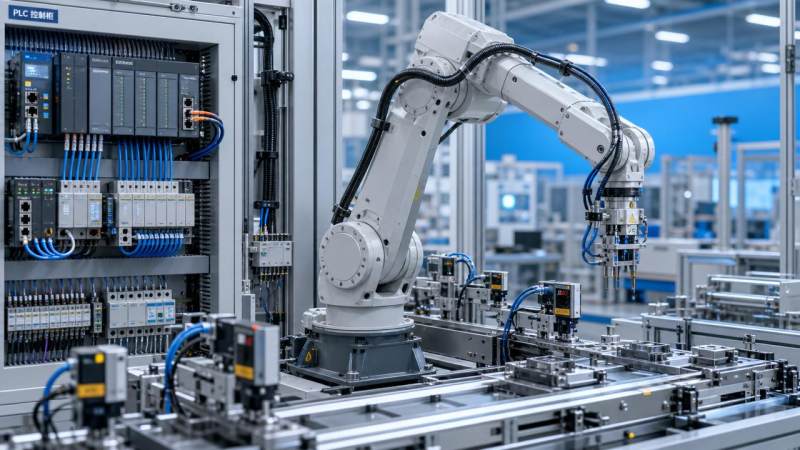
Choosing a reliable industrial automation manufacturer is about more than price or product range—it directly affects system uptime, scalability, compliance, and long-term ROI. For business evaluators comparing suppliers, the real differentiators lie in engineering credibility, standards alignment, integration capability, and data-backed performance. Understanding these factors helps reduce procurement risk and supports smarter investment decisions in modern manufacturing.
A checklist-based evaluation works better than a brand-driven comparison because automation projects rarely fail for one obvious reason. They fail when several small weaknesses combine: incomplete documentation, weak after-sales support, poor software compatibility, limited validation testing, or unclear compliance status. For a business evaluator, the best way to identify a reliable industrial automation manufacturer is to assess the supplier through a structured set of decision points that connect technical quality with commercial risk.
Why business evaluators should use a practical assessment checklist first
Before reviewing catalogs, quotations, or factory videos, it is important to define what “reliable” actually means in a procurement context. A reliable industrial automation manufacturer should not only deliver equipment that works on day one, but also support stable operation over years of production. That means reliability must be judged across engineering, software, service, compliance, and lifecycle economics.
For modern factories, especially those adopting Industry 4.0 architectures, one weak supplier can affect the entire line. Robotic cells, PLC systems, motion control, IIoT platforms, and pneumatic or hydraulic subsystems are now interconnected. If one manufacturer lacks integration discipline, the result may be costly downtime, fragmented data, or limited future expansion. This is why a checklist helps evaluators prioritize the right questions early.
Core checklist: what sets a reliable industrial automation manufacturer apart
Use the following checklist as an initial screening framework. These points help distinguish a dependable industrial automation manufacturer from a supplier that only appears competitive on paper.
- Verified engineering capability: Look for documented design standards, application engineering depth, and evidence of successful deployment in comparable production environments. A reliable supplier should explain system architecture, not just product specifications.
- Compliance with global standards: Confirm alignment with ISO, IEC, CE, and other relevant certification frameworks. Compliance should be traceable through technical files, test records, and safety documentation.
- Integration readiness: Check compatibility with major PLC brands, fieldbus protocols, MES/ERP interfaces, industrial Ethernet, and plant-level data systems. An industrial automation manufacturer should reduce integration friction, not create it.
- Performance transparency: Ask for measurable data such as cycle time, positioning accuracy, repeatability, MTBF expectations, energy consumption, environmental tolerance, and load conditions under which performance is validated.
- Software and controls maturity: Hardware quality alone is not enough. Evaluate firmware stability, HMI usability, diagnostics, remote support tools, cybersecurity practices, and upgrade management.
- Manufacturing quality control: Review inspection routines, traceability systems, component sourcing consistency, and test procedures before shipment. A reliable industrial automation manufacturer should have disciplined internal quality gates.
- Lifecycle service support: Spare parts availability, field service response time, commissioning assistance, operator training, and preventive maintenance guidance are all critical to long-term value.
- Scalability and roadmap fit: The supplier should support future line expansion, multi-site standardization, and digitalization goals rather than locking the buyer into a narrow technical path.
This checklist is especially useful when comparing suppliers across robotics, motion systems, control platforms, and industrial software, where product differences can look small but operational consequences can be large.
How to verify engineering credibility instead of trusting marketing claims
One of the fastest ways to assess an industrial automation manufacturer is to test whether its team can move beyond brochure language. Ask for project references in similar industries, load profiles, duty cycles, environmental conditions, and line speeds. If the supplier cannot connect its solution to your operating reality, reliability is still unproven.
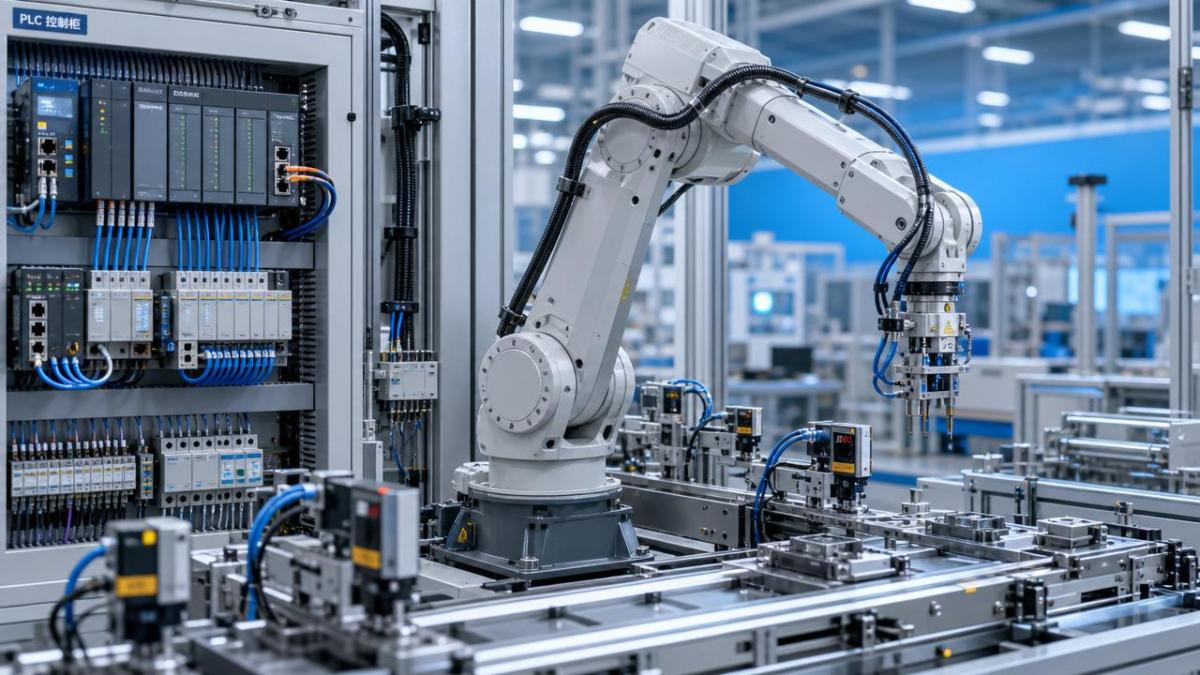
Business evaluators should request supporting evidence in four areas: application case studies, FAT or SAT procedures, design documentation samples, and failure-prevention methods. For example, in robotic or servo-driven applications, good manufacturers should be able to discuss vibration control, motion tuning, safety zoning, cable management, and maintenance intervals. In PLC and IIoT environments, they should explain data architecture, redundancy strategy, alarm logic, and system recovery procedures.
A reliable industrial automation manufacturer also tends to be clear about project limits. Transparency about operating boundaries is a positive sign. Suppliers that promise universal compatibility or unrealistic throughput without clarifying assumptions may create hidden risk later.
The standards and documentation checks that should never be skipped
For business evaluation teams, standards alignment is not a paperwork detail. It is a risk-control tool. A dependable industrial automation manufacturer should provide documentation that supports machine safety, electrical conformity, installation quality, and cross-border deployment requirements.
Priority checks include conformity declarations, electrical schematics, risk assessment support, safety circuit design, software backup procedures, parts lists, and maintenance manuals. If your project involves regulated environments or export markets, ask whether the manufacturer has experience adapting systems to different legal and technical compliance frameworks.
Documentation quality often predicts implementation quality. If technical documents are incomplete, inconsistent, or difficult to interpret during the sales phase, post-installation support may be equally difficult. In practical terms, this affects commissioning speed, troubleshooting efficiency, and internal handover to operations teams.
Compare suppliers by operational fit, not by catalog breadth alone
Many buyers assume that a broad product portfolio automatically signals strength. In reality, the more important issue is operational fit. The right industrial automation manufacturer should match your factory’s technical architecture, maintenance capabilities, expansion plans, and production priorities.
A useful comparison method is to evaluate suppliers by scenario:
This approach helps evaluators avoid paying for capabilities they do not need while ensuring the chosen industrial automation manufacturer can support the actual production model.
Commonly overlooked risk items in supplier selection
Even experienced procurement teams sometimes focus too heavily on unit price, lead time, or brand familiarity. However, several overlooked items often determine whether the supplier relationship performs well after installation.
- Dependency on single-source critical parts: If key drives, controllers, or sensors have long replenishment times, maintenance risk increases.
- Unclear software ownership: Confirm access rights, source-code policies where relevant, licensing terms, and backup procedures.
- Limited training scope: Good commissioning is not enough if operators and maintenance teams cannot independently manage normal issues.
- Poor service localization: A global industrial automation manufacturer should still provide responsive regional support, parts stocking, and language-appropriate technical assistance.
- No clear obsolescence plan: Buyers should ask how long core components will remain supported and what migration path exists when products are phased out.
These items matter because business value in automation is created during operation, not just at procurement. Any weakness that slows troubleshooting or future upgrades can erode ROI even when the initial quote looked attractive.
A practical execution plan for evaluating an industrial automation manufacturer
To make supplier comparison more objective, business evaluators should structure the process into clear stages. First, define critical outcomes: throughput targets, uptime expectations, integration needs, safety requirements, and expected service life. Second, create a weighted scorecard that reflects operational priorities rather than generic procurement categories.
Third, request evidence in a consistent format from each industrial automation manufacturer. This may include reference projects, compliance files, control architecture diagrams, FAT templates, lead-time assumptions, support SLAs, and spare-parts policies. Fourth, involve cross-functional reviewers early—production, maintenance, engineering, IT, and EHS often identify different forms of supplier risk.
Finally, validate total cost of ownership. Include installation effort, software integration work, training time, maintenance planning, and expected upgrade requirements. In many cases, the best industrial automation manufacturer is not the one with the lowest quoted cost, but the one with the strongest combination of deployment confidence and lifecycle resilience.
Questions to ask before moving to quotation or final negotiation
If a supplier passes the initial screening, the next step is to clarify practical details that affect commercial decisions. Ask these questions before finalizing comparisons:
- What performance data can you verify under conditions similar to our application?
- Which international standards and certifications apply to this solution, and what documentation is included?
- How does your system integrate with our existing PLC, MES, ERP, robotics, or motion platforms?
- What are the lead times for critical spare parts and regional service support?
- What training, commissioning, and post-installation support are included in the scope?
- How do you handle software updates, cybersecurity, backups, and future migration?
- What assumptions are built into the proposal regarding cycle time, payload, duty cycle, and environmental conditions?
These questions help reveal whether the industrial automation manufacturer can support a durable partnership or only a transactional equipment sale.
Final decision guidance for lower-risk supplier selection
What sets a reliable industrial automation manufacturer apart is not one headline feature, but a pattern of evidence: strong engineering logic, transparent performance data, standards discipline, integration readiness, and dependable lifecycle support. For business evaluators, the safest decision usually comes from balancing technical fit with implementation confidence and long-term serviceability.
If you need to move the evaluation forward, prioritize discussion around system parameters, compatibility with existing infrastructure, compliance scope, expected delivery schedule, total project budget, and service model after commissioning. Those are the questions that turn a general supplier comparison into a sound investment decision—and they are also the clearest indicators of whether an industrial automation manufacturer is truly reliable.
Recommended News
- 2026/05/07Remote I O module wholesale: how much redundancy is enough?Remote I/O module wholesale: learn how much redundancy is enough to protect uptime, control costs, and improve reliability with practical procurement guidance.
- 2026/05/07Open source PLC trends are changing small-line automation choicesOpen source PLC trends are reshaping small-line automation with lower lock-in, faster integration, and scalable control choices. Discover what buyers should evaluate before upgrading.
- 2026/05/07What VFD suppliers rarely mention about motor heat and tuningvfd variable frequency drive supplier insights on hidden motor heat, poor tuning, and low-speed load risks—learn practical checks to prevent failures and extend motor life.