
Search News
Industry Portal
Popular Tags
Is shipbuilding ready for industrial robotic welder oem
Author
Dr. Victor Gear
Time
May 16, 2026
Pageviews
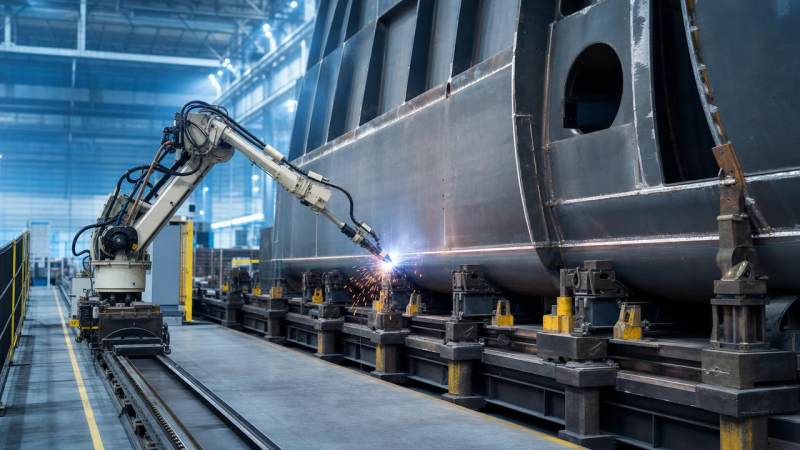
As shipyards face pressure to improve weld quality, throughput, and labor resilience, the question is no longer whether automation matters, but whether an industrial robotic welder oem for shipbuilding can meet real production demands. For business evaluators, understanding technical fit, compliance, lifecycle cost, and integration risk is essential before committing to large-scale welding automation.
What makes an industrial robotic welder OEM for shipbuilding different from general welding automation?
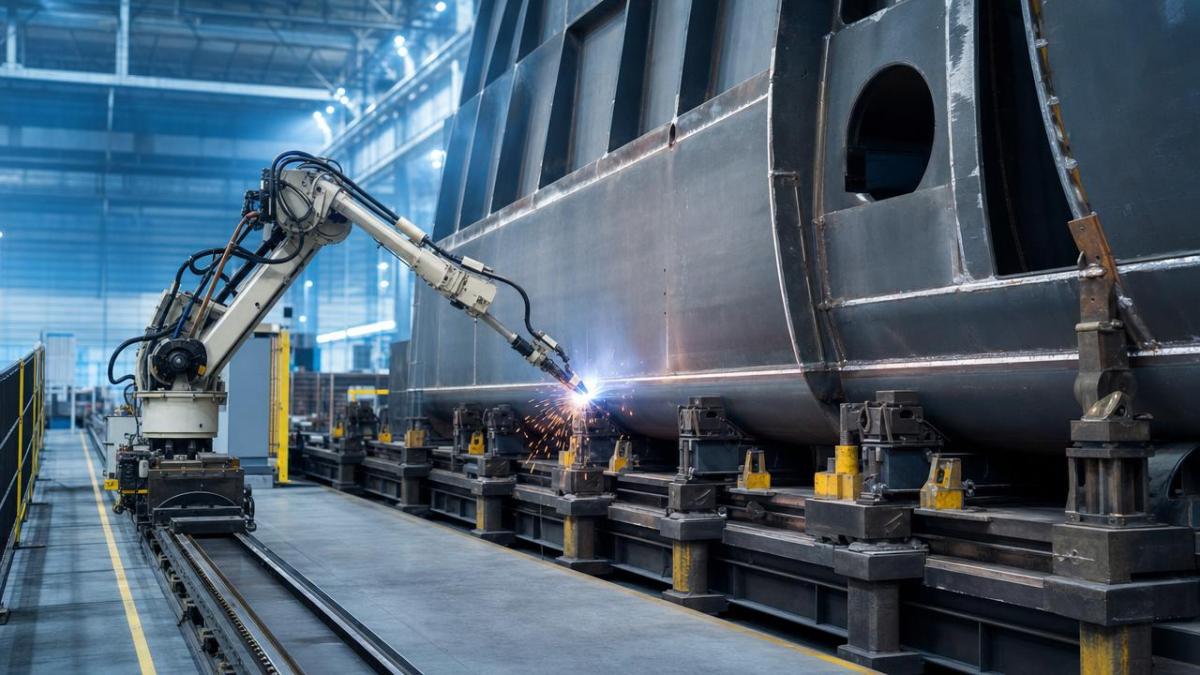
Shipbuilding welding is not a standard factory task. It involves thick plates, large workpieces, variable joint geometry, outdoor or semi-outdoor production zones, and strict documentation demands. That is why an industrial robotic welder oem for shipbuilding must be evaluated beyond robot payload and arc speed alone.
A suitable OEM solution usually combines robotic arms, welding power sources, seam tracking, positioners, safety architecture, PLC coordination, and production data interfaces. In shipyards, the real question is whether the full system can stay stable under distortion, long weld runs, and mixed production schedules.
Key differences buyers should verify
- Joint variability handling, including fillet, butt, curved seams, and panel section welding with fit-up deviations.
- Heavy-duty motion coordination between robot, gantry, track, and workpiece positioner.
- Integration with yard-level controls, welding procedure records, MES, and traceability workflows.
- Serviceability in harsh environments where dust, heat, plate scale, and long cable routing affect uptime.
For business evaluators, this means the supplier should be judged as a systems partner, not only as a robot seller. G-IFA’s benchmarking approach is useful here because it connects robotics, PLC control, motion systems, and industrial software into one decision framework.
Which shipbuilding scenarios are most suitable for robotic welding?
Not every weld in a shipyard should be automated first. The highest return usually comes from repetitive, high-volume, safety-sensitive, or quality-critical welding stages. Choosing the right entry point reduces implementation risk and shortens payback time.
The table below helps business evaluators map common shipyard tasks to automation readiness when considering an industrial robotic welder oem for shipbuilding.
This comparison shows why flat panels and repeatable sub-assemblies are often the best starting points. They provide measurable output, easier fixturing, and clearer baseline data for labor savings, weld quality, and rework reduction.
Practical first-phase deployment logic
- Select weld families with repeatable geometry and enough annual volume.
- Confirm that upstream cutting and fit-up quality are stable enough for robotic execution.
- Define whether the target is labor relief, quality stabilization, output increase, or documentation improvement.
What technical performance should business evaluators examine first?
When reviewing an industrial robotic welder oem for shipbuilding, decision-makers often focus too much on headline specifications. In practice, performance depends on the interaction of welding process, mechanical motion, sensing, and software coordination.
Core technical checkpoints
- Robot payload and reach matched to torch package, cable dress, and part access.
- Track or gantry accuracy over long travel distances common in large ship sections.
- Arc stability across thick materials and multi-pass welding procedures.
- Seam finding and seam tracking capability for gap variation and thermal distortion.
- Offline programming and digital twin support to reduce production interruption.
- Data capture for weld status, alarms, parameter logging, and traceability reporting.
G-IFA’s cross-pillar view matters because welding automation cannot be assessed in isolation. A strong robot with weak control integration or poor motion synchronization may underperform in real yard conditions. Business evaluators should therefore request system-level validation, not isolated component brochures.
How should buyers compare OEM solutions for shipbuilding use?
A side-by-side comparison helps prevent procurement from being driven only by initial price. The right industrial robotic welder oem for shipbuilding should be judged on operational fit, implementation burden, and long-term support requirements.
The following table gives a structured comparison model that procurement and technical teams can use together during supplier screening.
This type of comparison shifts procurement from a price-first mindset to a risk-adjusted decision. It also helps align finance, operations, and engineering on the same acceptance criteria before negotiations begin.
What are the biggest cost drivers and hidden budget risks?
The purchase price of a robotic cell is only one part of the investment. For an industrial robotic welder oem for shipbuilding, budget overruns often come from site adaptation, fixtures, software interfaces, welding trials, safety retrofits, and production ramp-up losses.
Cost items that deserve early visibility
- Cell hardware: robot, power source, track, positioners, safety fences, extraction, and torches.
- Engineering scope: process design, fixture design, simulation, controls integration, and acceptance testing.
- Site readiness: floor reinforcement, utilities, cable routing, ventilation, and material handling coordination.
- Operational transition: programmer training, operator qualification, spare parts, and temporary productivity loss.
A lower quotation can become more expensive if commissioning takes longer or if the system cannot handle expected part variation. Business evaluators should ask suppliers to separate standard equipment cost from customization cost and from interface cost.
Alternatives worth comparing
In some yards, semi-automatic welding stations, mechanized carriages, or dedicated gantry systems may offer better economics than a fully flexible robotic architecture. The choice depends on product mix, section size, labor profile, and digital maturity. A benchmark repository such as G-IFA is valuable because it enables neutral comparison across these technology paths.
Which standards and compliance points should not be overlooked?
Compliance is often treated as a final checklist item, but it should shape supplier selection from the beginning. An industrial robotic welder oem for shipbuilding may need to align with machinery safety requirements, electrical standards, welding procedure controls, and site-specific inspection rules.
The table below summarizes common compliance areas that business evaluators should map during technical clarification.
This is where G-IFA adds value as an engineering benchmark repository. Instead of reviewing standards in isolation, buyers can assess how robotics, controls, and software together affect compliance readiness and future scalability.
How can implementation risk be reduced before purchase approval?
The biggest mistakes usually happen before the purchase order is signed. If the scope is vague, stakeholders will interpret the project differently, and the robotic system may arrive with missing interfaces, unclear acceptance metrics, or unrealistic cycle expectations.
Risk reduction checklist for business evaluators
- Define target weld families, annual volume, material thickness range, and quality criteria.
- Request sample part review, path simulation, or process feasibility discussion before final quotation.
- Clarify whether fixtures, extraction, safety, PLC interface, and MES connection are included or excluded.
- Set factory acceptance and site acceptance criteria tied to measurable outputs, not general promises.
- Ask for a spare parts list, training matrix, and commissioning resource plan.
A disciplined procurement process protects both schedule and budget. It also makes supplier comparisons more objective, especially when different industrial robotic welder OEM proposals use different technical assumptions.
FAQ for evaluating an industrial robotic welder OEM for shipbuilding
How do we know whether robotic welding fits our shipyard mix?
Start with data, not enthusiasm. Review repeatability of part families, welding hours per part type, rework rates, and labor bottlenecks. If a section family has stable geometry and high annual repetition, robotic welding is usually easier to justify than highly variable repair work.
What should we prioritize: flexibility or throughput?
That depends on your production model. High-mix yards may need flexible programming and adaptive sensing, even if speed is lower. More standardized panel lines often gain more from dedicated high-throughput layouts with simpler changeovers.
How long does implementation usually take?
Timing depends on customization depth, site readiness, and interface complexity. Buyers should ask for a stage-by-stage schedule covering engineering, fabrication, factory acceptance, shipment, installation, commissioning, and operator training rather than relying on one total lead-time number.
What is the most common misunderstanding in procurement?
Many teams assume the robot itself determines success. In shipbuilding, results are usually shaped by fixture quality, fit-up consistency, motion coordination, and control integration. A cheaper robot cell may become expensive if these surrounding conditions are weak.
Why choose us for evaluation support and next-step planning?
G-IFA helps business evaluators make better decisions by turning complex automation claims into comparable engineering evidence. Our value is not limited to one device category. We connect Industrial Robotics & Cobots, PLC & Control Systems, Motion Control & Transmission, Industrial IoT & Software, and Pneumatic & Hydraulic Systems into one practical assessment framework.
If you are reviewing an industrial robotic welder oem for shipbuilding, we can support parameter confirmation, technical comparison, interface scope clarification, compliance mapping, lifecycle cost review, and delivery risk analysis. This is especially useful when multiple suppliers present different architectures that are difficult to compare directly.
- Need help checking robot reach, payload, travel axis, or seam tracking relevance to your part family.
- Need support comparing quotations that differ in fixtures, software scope, safety content, or commissioning responsibility.
- Need clarity on lead time, customization boundaries, standards alignment, or data integration expectations.
- Need a structured discussion for sample validation, solution selection, or budget-stage technical filtering.
Contact us to discuss your target welding scenarios, expected output, certification requirements, integration conditions, and quotation questions. A clearer evaluation process today can prevent costly redesign, delayed commissioning, and underperforming automation tomorrow.
Recommended News
- 2026/10/24Car Spare Parts: How to Check Fitment and Avoid Ordering the Wrong PartOrder car spare parts with confidence. Learn how to verify VINs, OEM numbers, and fitment details to avoid costly mistakes and choose the right replacement first time.
- 2026/10/23How Do You Select a Motion Control System for Synchronized Axes?How do I select a motion control system for synchronized axes? Discover key timing, feedback, and performance checks to choose confidently and reduce costly integration risks.
- 2026/10/23Integrating End-of-Line Sortation with Packing Stations and Conveyor ControlsOptimize end of line sortation with coordinated packing stations and conveyor controls. Learn how to prevent bottlenecks, improve routing accuracy, and handle exceptions reliably.