
Search News
Industry Portal
Popular Tags
What affects accuracy in industrial robotic welder oem
Author
Dr. Victor Gear
Time
May 16, 2026
Pageviews
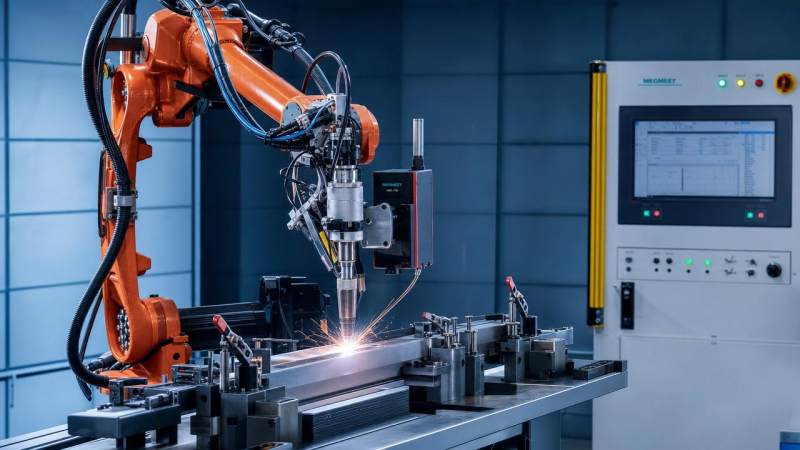
For technical evaluators, the accuracy of an industrial robotic welder oem with high precision depends on far more than arm repeatability alone.
Torch calibration, motion control quality, seam tracking, fixture stability, sensor integration, and software intelligence jointly determine weld consistency, spatter control, and rework exposure.
In complex production environments, even a well-specified robot can underperform if the welding cell lacks structural rigidity, thermal compensation, or process feedback.
This guide explains what truly affects accuracy in an industrial robotic welder oem with high precision, and how to compare OEM solutions with stronger engineering confidence.
What does accuracy really mean for an industrial robotic welder oem with high precision?
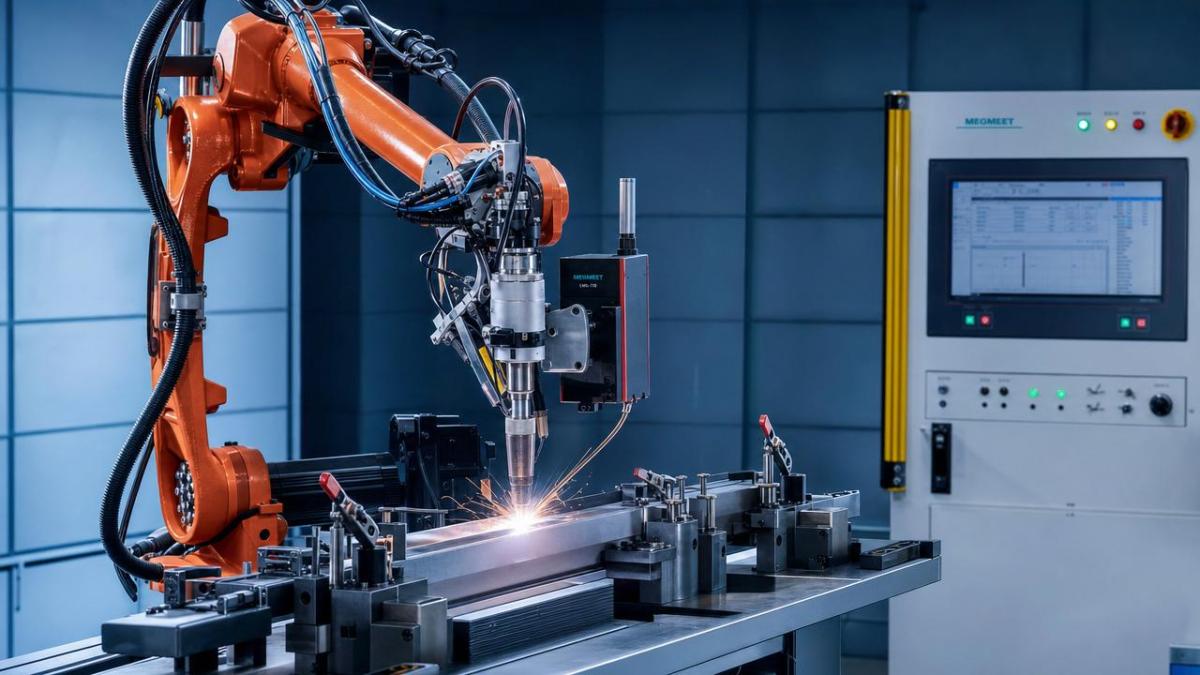
Accuracy in robotic welding is often misunderstood as repeatability alone. Repeatability shows how closely a robot returns to one programmed point.
Real welding accuracy is broader. It includes TCP precision, path fidelity, torch angle control, arc start consistency, and positional stability during live welding.
An industrial robotic welder oem with high precision must maintain correct weld location while moving through acceleration, heat distortion, and part variation.
A robot may have excellent catalog repeatability, yet still deliver poor seams if fixture shift, wire feed fluctuation, or calibration drift remains unresolved.
That is why welding accuracy should be evaluated at the cell level, not only at the robot arm specification level.
Key components of practical welding accuracy
- Robot arm positioning and dynamic stiffness
- Tool Center Point calibration accuracy
- Torch neck, contact tip, and nozzle condition
- Servo interpolation and controller response
- Workpiece fixture repeatability and clamping force
- Arc sensing, laser seam tracking, or vision correction
- Process software for adaptive path compensation
Which mechanical factors most affect weld accuracy?
Mechanical rigidity is the first hidden variable. The base frame, robot pedestal, slide axes, and fixture tables must resist vibration under dynamic load.
If structural deflection occurs, the programmed path no longer matches the true arc position. This becomes worse on long welds and high-speed travel.
Backlash in external axes also degrades path control. Rotary positioners and linear tracks must be matched to the robot controller with precise synchronization.
Cable dress matters more than many expect. Poor routing can pull the torch during orientation changes, especially on thin-gauge or narrow-gap applications.
Consumable wear is another overlooked factor. A worn contact tip shifts wire exit position and directly changes the effective TCP.
Mechanical checkpoints to compare OEM cells
- Verify frame stiffness under peak acceleration.
- Inspect backlash values for positioners and tracks.
- Review torch mounting repeatability after maintenance.
- Check fixture datum strategy and clamp repeatability.
- Confirm cable package influence during full motion envelopes.
How do control systems and software intelligence influence precision?
An industrial robotic welder oem with high precision depends heavily on controller quality. Motion algorithms define how well the robot follows complex weld trajectories.
Interpolation speed, path smoothing, corner handling, and acceleration planning all influence bead placement and heat input consistency.
Better controllers preserve torch angle and travel speed during curved paths. Weaker tuning may create overshoot, lag, or inconsistent arc length.
Software intelligence adds another layer. Adaptive programs can modify path offsets based on sensed seam deviation, thermal expansion, or prior weld results.
This is especially important in mixed-model production, where part-to-part tolerance varies and offline programming alone is insufficient.
Software functions that improve accuracy
- TCP auto-calibration routines
- Seam finding before arc ignition
- Real-time laser seam tracking
- Touch sensing for part location correction
- Adaptive weaving and gap compensation
- Weld data logging for drift analysis
In smart manufacturing environments, these capabilities connect well with MES, quality databases, and traceability systems.
That connection supports a more reliable industrial robotic welder oem with high precision across long production cycles, not only during initial acceptance testing.
Why do sensors, calibration, and fixturing often decide final weld quality?
Many welding errors begin before the arc starts. If the workpiece sits slightly off datum, the robot can execute perfectly and still miss the joint.
That is why fixture design is central to any industrial robotic welder oem with high precision. Clamps must control part movement without inducing distortion.
Calibration routines also need discipline. TCP, user frames, positioner frames, and sensor offsets should be verified at defined intervals.
Laser sensors improve joint localization, but only when mounted rigidly and protected from smoke, spatter, and reflective interference.
Touch sensing remains useful for many steel applications, yet it adds cycle time and may struggle on coated or inconsistent surfaces.
Common calibration and sensing risks
How should OEM solutions be compared beyond brochure specifications?
Brochure numbers rarely tell the full story. A useful comparison should combine robot data, weld process behavior, and integration discipline.
Ask whether the industrial robotic welder oem with high precision was validated on similar materials, joint geometries, and takt-time conditions.
Check if the OEM provides acceptance criteria based on bead placement, penetration consistency, and destructive or non-destructive test results.
Also examine the data architecture. Strong OEM solutions allow traceable logging of current, voltage, travel speed, seam offset, and alarm history.
Those records make root-cause analysis faster when quality drift appears weeks after commissioning.
Comparison checklist for OEM evaluation
What are the most common mistakes when selecting an industrial robotic welder oem with high precision?
One frequent mistake is focusing only on robot brand reputation. Welding accuracy depends on the entire automation package and integration quality.
Another mistake is ignoring thermal behavior. Thin materials, long seams, and multi-pass welds can distort the part and invalidate static path assumptions.
Some evaluations underweight maintenance accessibility. If torch cleaning, tip replacement, and recalibration are difficult, long-term precision will decline.
It is also risky to skip sample trials using real production parts. Lab demonstrations often hide tolerance spread, contamination, and handling variation.
Finally, data visibility should not be optional. Without process logs, recurring accuracy losses are harder to diagnose and prevent.
Fast FAQ summary
The best industrial robotic welder oem with high precision combines stable mechanics, disciplined calibration, intelligent sensing, and traceable control software.
When these elements are evaluated together, welding accuracy becomes measurable, comparable, and more predictable across real industrial conditions.
A practical next step is to build a validation checklist using real parts, target tolerances, sensor requirements, maintenance routines, and digital traceability needs.
That approach makes it easier to benchmark each industrial robotic welder oem with high precision against long-term production performance, not marketing claims alone.
Recommended News
- 2026/10/24Car Spare Parts: How to Check Fitment and Avoid Ordering the Wrong PartOrder car spare parts with confidence. Learn how to verify VINs, OEM numbers, and fitment details to avoid costly mistakes and choose the right replacement first time.
- 2026/10/23How Do You Select a Motion Control System for Synchronized Axes?How do I select a motion control system for synchronized axes? Discover key timing, feedback, and performance checks to choose confidently and reduce costly integration risks.
- 2026/10/23Integrating End-of-Line Sortation with Packing Stations and Conveyor ControlsOptimize end of line sortation with coordinated packing stations and conveyor controls. Learn how to prevent bottlenecks, improve routing accuracy, and handle exceptions reliably.