
Search News
Industry Portal
Popular Tags
What to check before hiring an industrial automation manufacturer
Author
Dr. Victor Gear
Time
May 18, 2026
Pageviews
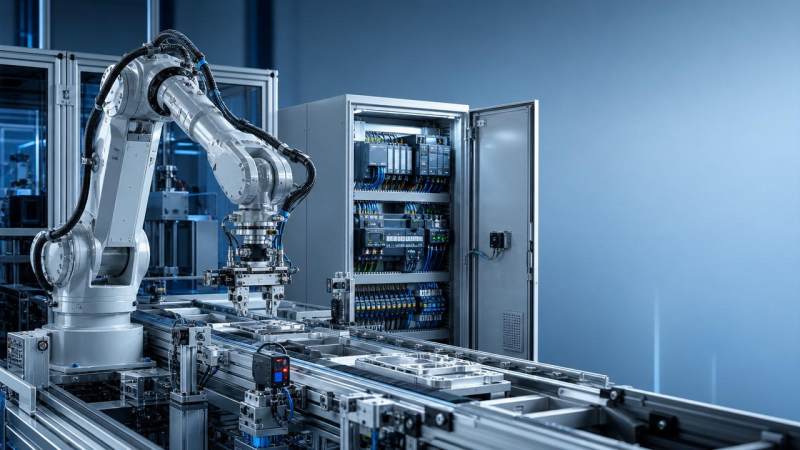
Choosing an industrial automation manufacturer now requires more than comparing equipment catalogs or headline pricing.
Automation projects sit inside a fast-changing environment shaped by Industry 4.0, tighter compliance, software-heavy integration, and pressure for measurable uptime.
The right industrial automation manufacturer can improve throughput, traceability, and lifecycle stability.
The wrong one can create commissioning delays, data silos, safety issues, and expensive retrofits.
That is why pre-selection checks should focus on technical depth, interoperability, engineering discipline, and long-term support.
Why evaluation standards for an industrial automation manufacturer are changing
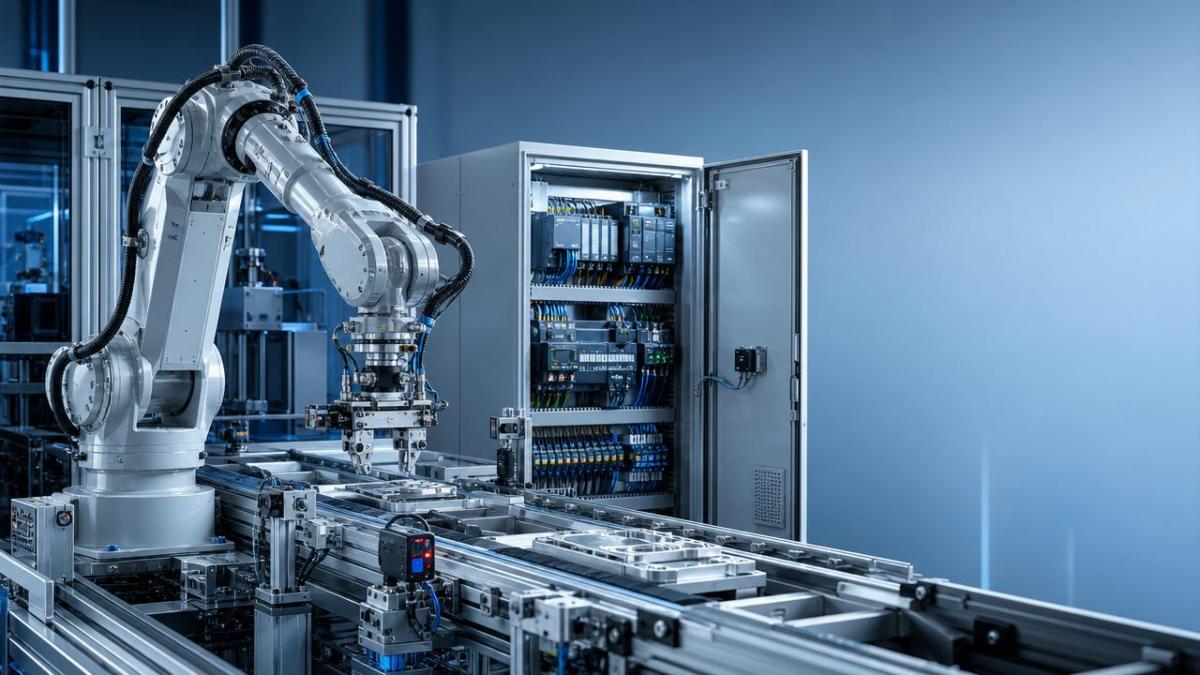
Factories no longer buy isolated machines.
They invest in connected production ecosystems that combine robotics, PLC platforms, drives, sensors, MES, ERP links, and remote diagnostics.
This shift changes what matters when reviewing an industrial automation manufacturer.
Mechanical quality is still essential, but software maturity now influences project outcomes just as strongly.
Global Intelligent Factory & Automation (G-IFA) tracks this change through benchmark data across robotics, control systems, motion platforms, industrial software, and fluid power.
A clear pattern appears.
Selection decisions increasingly depend on verifiable standards, cross-platform integration, cybersecurity readiness, and evidence of performance under real industrial conditions.
The strongest trend signals before hiring an industrial automation manufacturer
Several signals show why due diligence must go deeper than a standard vendor review.
- Automation architectures are becoming hybrid, mixing legacy assets with smart devices and cloud-enabled software.
- Compliance expectations are rising across ISO, IEC, CE, machine safety, and electrical documentation.
- Production lines need flexible scaling for shorter product cycles and variable batch sizes.
- Data visibility matters more because maintenance, quality, and planning depend on connected systems.
- After-sales support is under more scrutiny as downtime costs continue to increase.
Each signal raises the threshold for what a capable industrial automation manufacturer must prove before a contract starts.
What is driving these stricter selection checks
The following factors explain why manufacturer assessment now needs a more structured approach.
How a weak industrial automation manufacturer affects operations
Poor selection often shows up after installation, when correction becomes expensive.
A weak industrial automation manufacturer may deliver hardware that works in isolation but fails in system context.
That can disrupt commissioning, reporting, recipe management, safety validation, and line balancing.
It also affects maintenance planning.
If documentation is incomplete or spare parts are not standardized, troubleshooting takes longer and uptime suffers.
- Engineering teams face more rework during FAT and SAT.
- Production lines lose efficiency because controls are not tuned for real operating loads.
- IT and OT coordination becomes harder when software interfaces are unclear.
- Expansion projects slow down because the original design is not modular.
The most important checks before choosing an industrial automation manufacturer
A practical review should test capability across engineering, compliance, integration, and support.
1. Confirm standards and certification discipline
Ask for documented compliance with relevant ISO, IEC, CE, and machine safety requirements.
A qualified industrial automation manufacturer should provide traceable technical files, not vague statements.
2. Review integration experience across the full stack
Check whether the supplier has delivered projects involving PLCs, robotics, servo systems, HMIs, SCADA, MES, and ERP connectivity.
Integration history matters more than isolated component expertise.
3. Verify software and data readiness
An industrial automation manufacturer should explain data flow, alarm structure, user access control, and remote diagnostics clearly.
If software ownership or update policy is unclear, future support risks increase.
4. Assess application-specific engineering depth
Experience in packaging, assembly, material handling, process control, or mixed manufacturing environments can affect design quality.
Request examples with similar cycle times, payloads, accuracy demands, or validation constraints.
5. Test scalability and modularity
Future-proof systems use modular panels, common communication protocols, and upgrade-friendly control architectures.
A strong industrial automation manufacturer should show how the line can expand without major redesign.
6. Check service structure and response capability
Support quality often determines lifecycle value.
Review spare parts access, field service coverage, remote troubleshooting, training, and escalation paths.
A simple way to compare an industrial automation manufacturer objectively
Use a weighted scorecard instead of relying on presentations alone.
What deserves closer attention in the next evaluation cycle
Before final selection, focus on the areas most likely to affect long-term stability.
- Proof of successful commissioning in comparable industrial environments.
- Transparency on third-party components, firmware, and protocol dependencies.
- Clear ownership of source files, backups, recipes, and software revisions.
- Documented change management for upgrades and line modifications.
- Realistic lead times for panels, drives, sensors, and critical spare parts.
- Training plans for operation, maintenance, and diagnostic teams.
These checks help distinguish a sales-ready supplier from a truly capable industrial automation manufacturer.
A stronger next step for lower-risk automation decisions
The market now rewards evidence-based selection.
When comparing any industrial automation manufacturer, prioritize verifiable engineering quality over broad claims.
Review standards, integration cases, software structure, service response, and expansion logic before approval.
Using benchmark-oriented references such as G-IFA can improve visibility across robotics, control systems, motion platforms, industrial software, and fluid power technologies.
That approach reduces uncertainty and supports automation investments that stay reliable as production demands evolve.
Build a shortlist, request evidence, score each candidate objectively, and validate lifecycle support before committing.
Recommended News
- 2026/10/24Car Spare Parts: How to Check Fitment and Avoid Ordering the Wrong PartOrder car spare parts with confidence. Learn how to verify VINs, OEM numbers, and fitment details to avoid costly mistakes and choose the right replacement first time.
- 2026/10/23How Do You Select a Motion Control System for Synchronized Axes?How do I select a motion control system for synchronized axes? Discover key timing, feedback, and performance checks to choose confidently and reduce costly integration risks.
- 2026/10/23Integrating End-of-Line Sortation with Packing Stations and Conveyor ControlsOptimize end of line sortation with coordinated packing stations and conveyor controls. Learn how to prevent bottlenecks, improve routing accuracy, and handle exceptions reliably.